Call for Papers
Call for Papers
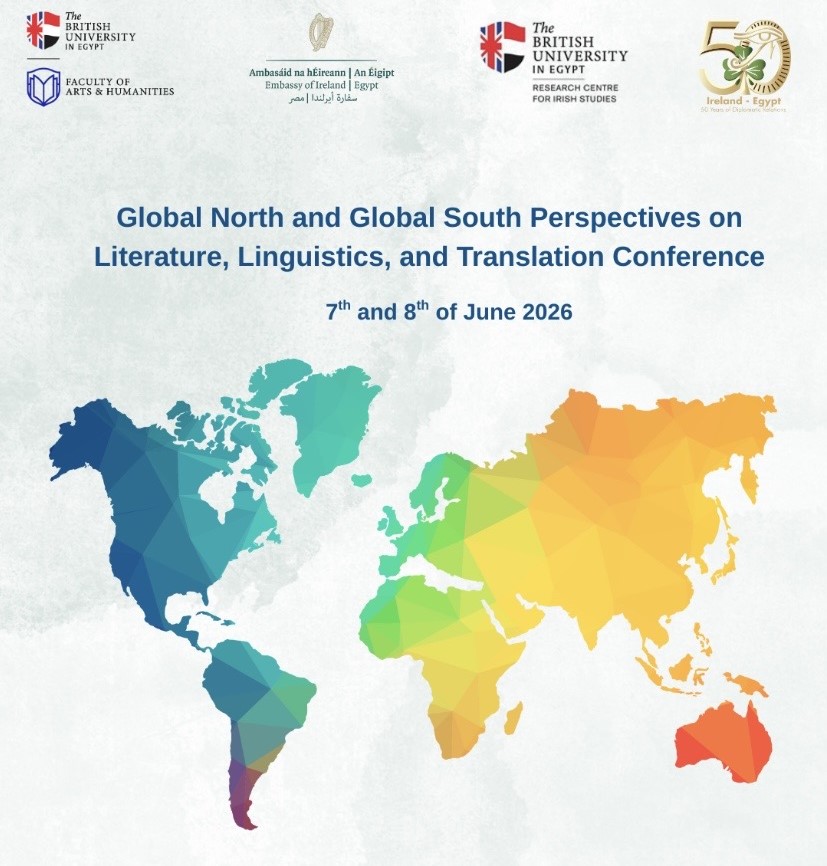
The 4th international conference “Global North and Global South Perspectives on Literature, Linguistics, and Translation” aims to bring together scholars, researchers, and practitioners to explore how cultural, linguistic, and literary knowledge is produced, interpreted, and contested across different global contexts. Anchored in the critical frameworks that distinguish between the Global North and the Global South—terms that signify not merely geographic but socio-economic and historical patterns of power and marginalisation in knowledge production—the conference foregrounds the diverse epistemologies, literary traditions, and translational practices that challenge Eurocentric norms and canon formation in the humanities.
By engaging with postcolonial, decolonial, and transnational perspectives, this conference highlights the urgency to rethink linguistic theory, literary canons, Irish studies, and translation studies in ways that centre marginalised voices and foster dialogue between dominant and peripheral scholarly communities. The aim of this in-person conference is to create a platform for debates that examine diverse intellectual traditions and acknowledge alternative perspectives that shape our understanding of the world in the hope that we create a pathway for the emergence of a plural Global Humanities.
Global North and Global South Perspectives on Literature, Linguistics, and Translation is organised by the Research Centre for Irish Studies (RCIS) in collaboration with the Department of English Language and Literature – Faculty of Arts and Humanities at the British University in Egypt. The conference is funded by the British University in Egypt.
The two days conference is organised in association with the Embassy of Ireland in Egypt and the keynote speakers are funded by the DFAT Grant to celebrate 50 Years of Irish-Egyptian relations and the 5th Anniversary of establishing the Research Centre for Irish Studies (RCIS). The event is a platform for scholarly debate around the shifting power dynamics in knowledge and research.
The conference invites comparative and interdisciplinary papers (15 minute presentations) that contribute to this emerging and evolving debate. We welcome contributions from established scholars, early career researchers, and graduate students from around the world who are interested in the following suggested topics, including, but not limited to:
Literature
- Finding the South in the North
- Finding the North in the South
- Climate Crisis/Climate Action in the GN and GS
- Intra-Global South relations in literature
- Identity formation across GN and GS divides
- Global Commodities and Literature
- Empire and the Environment / Decolonising Environments
- Terri-side and land back representations in contemporary Indigenous literatures
- Digital Globalisation and literary networks
- Urbicide in the GN and GS
- Post-Feminism in the GN and GS
- Power of Festivals and Oral Literatures in the GS
- From Clay Tablets to Digital Tablets: Technologies of textual Productions
- Speculative Fiction from the GN and GS
- Childeren’s Literature
Irish Studies
- Irish narratives across generations
- Writing by women in and out of Ireland
- Perspectives on Irish works from the GS
- Ireland between GN and GS: Colonial legacies and trans-national solidarities
- Linguistic marginalisation of Irish language
- Comparative readings of Irish and Global South literatures
- Irish and Global South Parallels in Linguistic History and Translation Resistance
- Translating Irish Literatures and Culture for Global South Audiences
- Anglo-Irish Literature and Empire
- Violence and Conflict in Ireland and Out of Ireland
- Global Irish Diaspora
- Multiple Representations of the Irish
Linguistics
- World Englishes and the Politics of Standarisation
- English as a Lingua Franca (EFL): North-South Pedagogical and Pragmatic Perspectives
- Sociolinguistic Inequality, Language Hierarchies, and Linguistic Capital
- Language, Power, and Identity in Postcolonial and Neo-colonial Contexts
- Digital Linguistics and Language Change in Global South Contexts
- AI, Bias, and Linguistic Representation in Global South Languages
- AI, Brain & Child
- Image Schema as a Cognitive Linguistic Tool
- Speech Act Theory- New Challenging Debates
- Urban Youth Languages in GN and GS
- Code-switching / Code-stitching
Translation, Power, and Knowledge Circulation
- Translation as Cultural Mediation Between the GN and GS
- Asymmetries in Translation Flows: Translating from vs into the GS
- Translation, Ideology, and Gatekeeping in Global Publishing
- Translation in Decolonising Knowledge and Curricula
- Translation and Interpreting Pedagogy Across Unequal Educational Contexts
- Decolonising Translation: Power, Hierarchy and Knowledge
- Publishing Dynamics: From GS to GN
- Human vs AI translations
- Translanguaging
- Experimental translation, transference, countertransference
Deadline for Abstract submission extended: 4 May 2026
Acceptance notification before: 18 May 2026
Publication of Papers
Paper Publication in International Journal
AWEJ TLS Special Journal Issue:
Contested Canons: Interrogating Global South and Global North Epistemologies in Drama, the Novel, Translation, Poetry, and the Visual Arts
Submission details:
Deadline for submission: 31 August 2026
Publication date of special issue: November 2026
Authors who participated in the conference and are listed in the conference programme and book of abstracts, are eligible for a 25% waiver of the basic publication fee.
Please note that this waiver does not cover the Bank of America transaction fee or the $50 indexing fee for each co-author (If any), as these charges are beyond our control.
Registration
Registration for presenters closed: 24 May 2026
Registration Details
Payment by Credit Card: MasterCard or Visa
Bank Transfer option available upon request, send email with subject line Global North and Global South Registration Bank Transfer to rania.khalil@bue.edu.eg
Your registration includes:
Opening Ceremony
Plenary Sessions
Reception (compliment of the Embassy of Ireland in Egypt to celebrate the 5 Years Anniversary of the Research Centre for Irish Studies RCIS)
Access to Conference Sessions in-person and pre-recorded
e-Certificate
Conference Pack
Transportation to and from campus,
Coffee Breaks
Cultural / Music Performance
Early Bird Registration 1,850 EGP closed
Regular 2,000 EGP
Non-Egyptian Early Bird Registration 33 GBP closed
Regular 35 GBP
Gala / Conference Dinner
Please email Associate Prof Walaa Hassan
walaa.hassan@bue.edu.eg
Keynote Speakers
Keynote Speakers
Keynote Speakers
7th June 2026
Prof. Patrick Lonergan

Patrick Lonergan is Professor of Drama and Theatre Studies in the School of English, Media and Creative Arts. He is a member of the Royal Irish Academy, an Executive Committee member of the International Federation for Theatre Research, and Chair of the Board of Directors of the Galway International Arts Festival.
At present, he is carrying out a CHANSE/HERA transnational research project called “CoastARTS: Coastlines as Zones of Ecocultural Crisis – Shaping Resilience through Transnational Performance-based Arts”, together will collaborators in the UK, Spain, Portugal and Norway. https://chanse.org/coastarts/
He has written six monographs: Theatre and Globalization: Irish Drama in the Celtic Tiger Era (winner of the 2008 Theatre Book Prize), The Theatre and Films of Martin McDonagh (Methuen Drama, 2012), Theatre and Social Media (2015 , revised edition 2024), Irish Drama and Theatre Since 1950 (Bloomsbury, 2019), Theatre Revivals for the Anthropocene (Cambridge, 2023), and Druid Theatre: 50 Years, which was published by Liliput Press in November 2025.
Recent journal articles and chapters include work on Ella Hickson, Caryl Churchill, Patrick Kavanagh, William Butler Yeats, Jezz Butterworth, and Dion Boucicault. He has also edited essay collections and anthologies about Irish theatre companies such as Rough Magic, the Gate Theatre, and Dublin Theatre Festival.
Prof. Khalid Amine

Khalid Amine is a Senior Professor of Performance Studies at the Faculty of Letters and Humanities, Abdelmalek Essaadi University, Tétouan, Morocco. He served as a Research Fellow and Advisory Board member (2010–2020) at the International Research Center “Interweaving Performance Cultures” at Freie Universität Berlin, and was the Friedrich Hölderlin Guest Professor at Goethe University, Frankfurt, in 2017/18. Since 2007, he has been the Founding President of the International Centre for Performance Studies (ICPS) in Tangier, where he convenes annual international conferences. His global leadership includes serving on the IFTR Executive Committee (2011–2018) and acting as an advisor to the Saudi Theatre and Performing Arts Commission (2020–2025).
Keynote Speakers
8th June 2026
Prof. Christina Morin

IASIL Chair
Christina Morin is Professor in English and Assistant Dean of Research in the Faculty of Arts, Humanities and Social Sciences at the University of Limerick. Her publications include Irish Gothic: An Edinburgh Companion (2023; co-edited with Jarlath Killeen), The Gothic Novel in Ireland, c. 1760-1829 (2018), Traveling Irishness in the Long Nineteenth Century (2017; co-edited with Marguèrite Corporaal), Irish Gothics: Genres, Forms, Modes, and Traditions (2014; co-edited with Niall Gillespie), and Charles Robert Maturin and the Haunting of Irish Romantic Fiction (2011). She is the chair of the International Association for the Study of Irish Literatures (IASIL), literature editor of the journal Eighteenth-Century Ireland, and founding co-editor of Bloomsbury’s Global Perspectives in Irish Literary Studies series.
Dr. Cónal Creedon

Cónal became the first Irish artist to receive the prestigious Leonardo da Vinci World Award of Arts 2024/25 [The World Cultural Council]. He was subsequently invited to present the 70th anniversary Beatty Lecture 2024 at McGill University, Montreal, Canada – introduced by Nobel Prize laureate, Prof. Omar Yaghi of Berkeley University.
Recognition for contribution to the Arts
– The Princess Grace Irish Library Residency Award 2025 [Monaco]
– The Ireland Funds Monaco Bursary Award 2025 – Laoch Racaire 2025 [Féile na Laoch]
– Irish American Award IBAM 2024 [Chicago, USA]
– CAP Award 2024 [Dublin, Ireland]
– IP Gold Award 2023 [USA]
– One City One Book 2022 [Ireland]
– Lord Mayor’s Culture Award 2020 [Cork Ireland]
– Eric Hoffer Award 2020 [USA]
– Writer-in-Residence at University College Cork [2016]
– Adjunct Professor of Creative Writing UCC [2017]
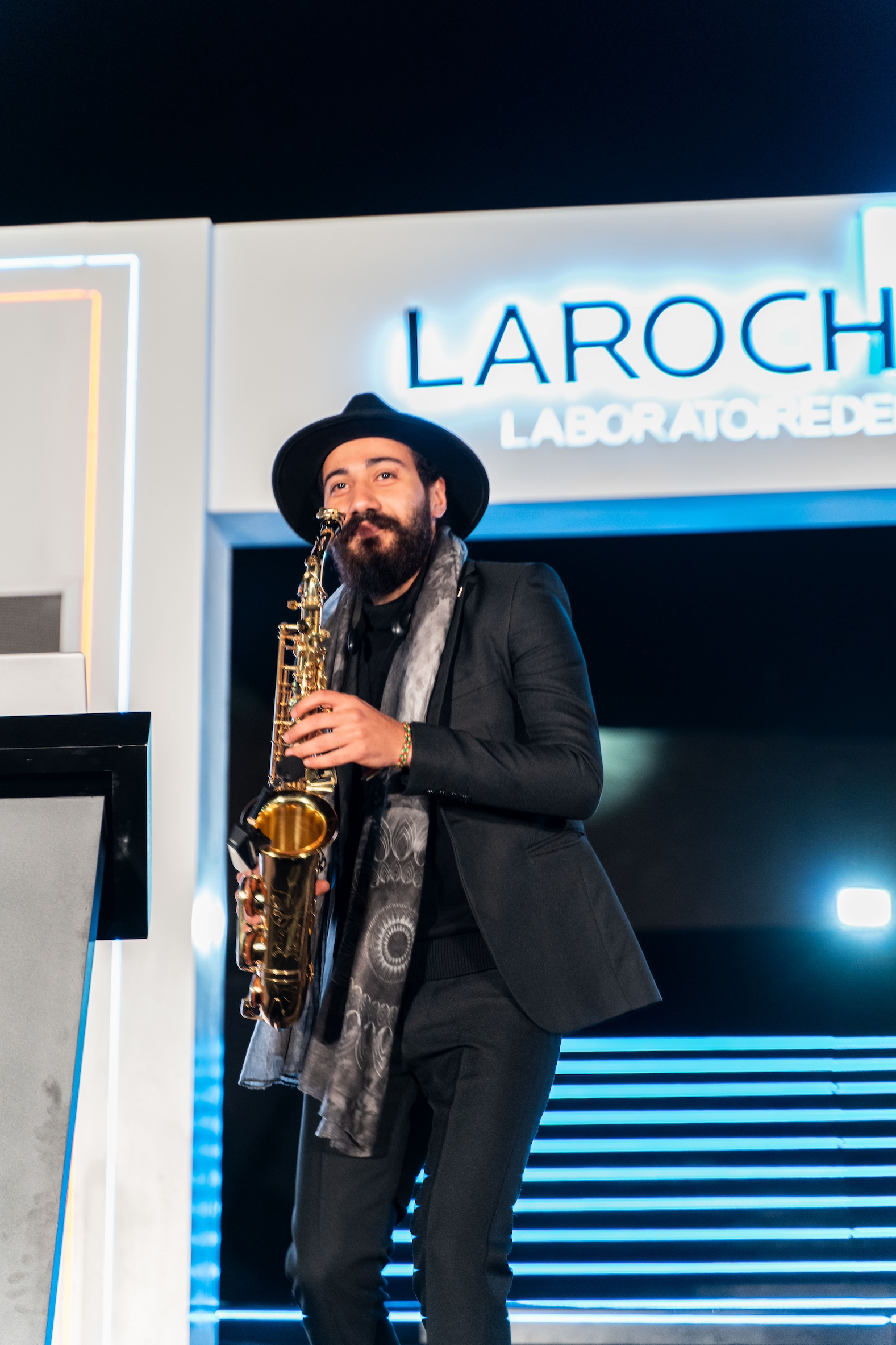
Music Performance
Meet the Saxophonist Mohamed Tarek
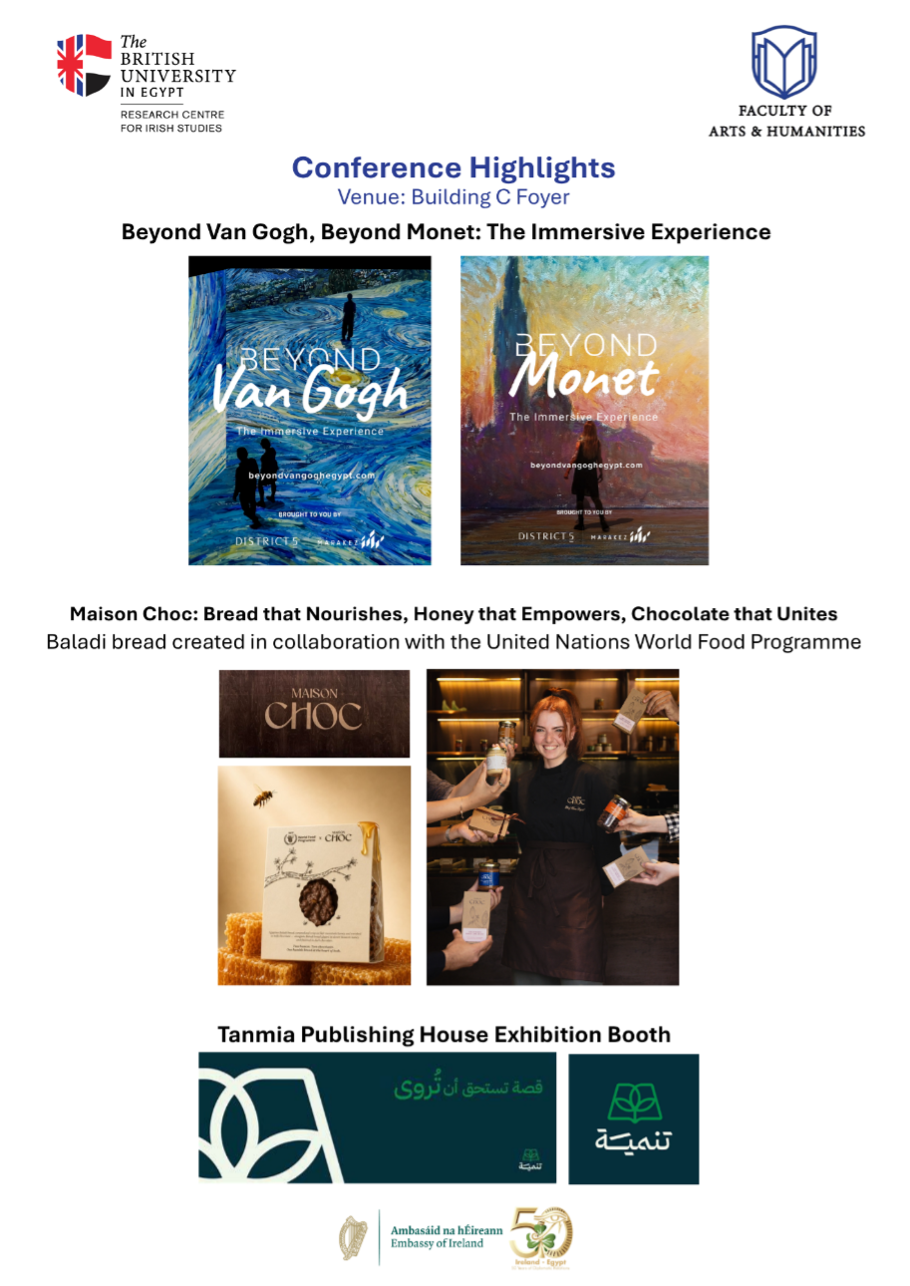
Beyond Van Gogh and Monet
We have some exciting news!
A reimagining of Van Gogh and Claude Monet will be featured on the 7th and 8th June 2026. Come and find them in building C – foyer
Be the first to secure a discounted ticket for the special immersive art experience.
An exhibition that reimagines Vincent van Gogh’s and Claude Monet’s paintings through the intersection of art and technology
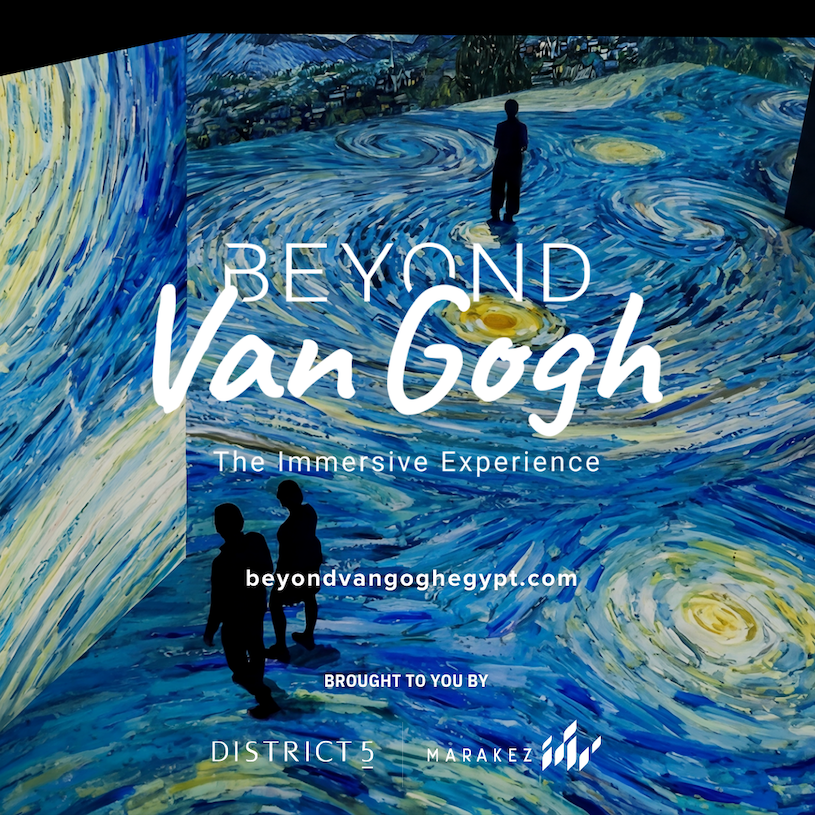
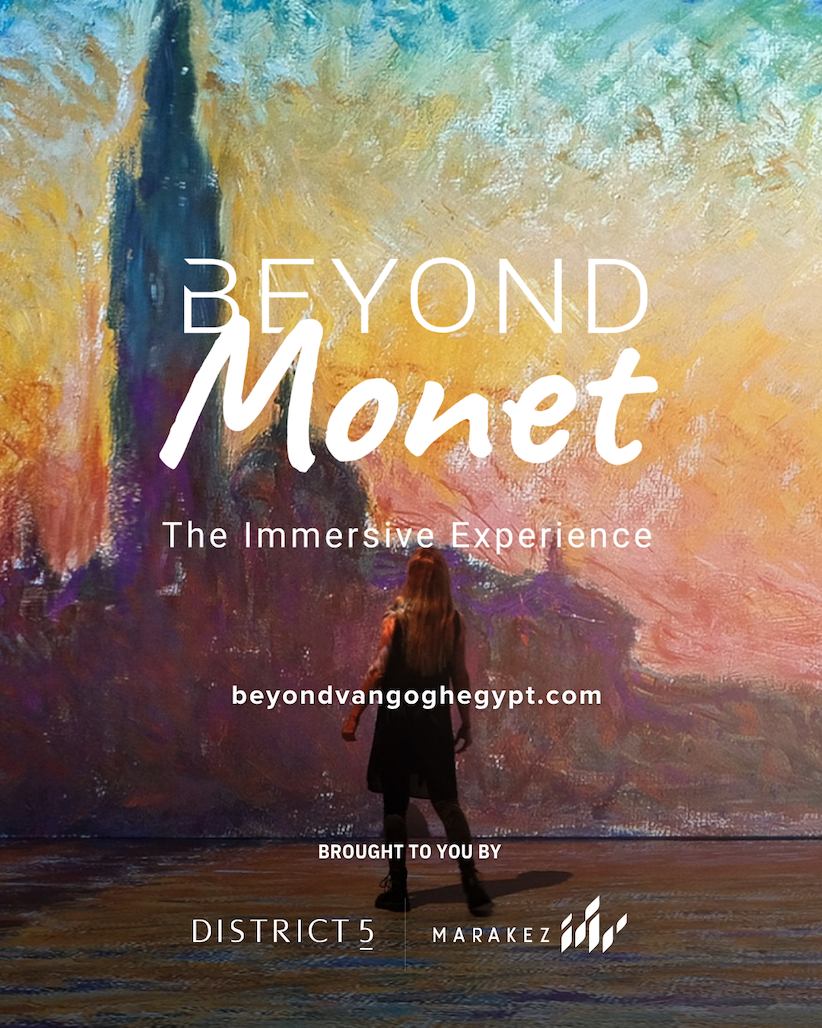
The Immersive Experience is a digital art exhibition that has welcomed millions of visitors worldwide. Redefining the intersection of art and technology, the exhibition reimagines Vincent van Gogh’s works in a format designed for contemporary audiences. Currently presenting its Egyptian debut at District 5 by Marakez in New Cairo through June 20th, the exhibition transforms over 300 of Van Gogh’s masterpieces into a fully immersive digital environment using large-scale projection technology and curated sound design. By elevating these works into a multi-sensory environment, it allows audiences to develop a deeper connection with masterpieces that was once unimaginable, creating a dynamic cultural destination that engages a new generation of art enthusiasts.
Visit the sales booth to secure your discounted tickets before the show ends on June 20th!
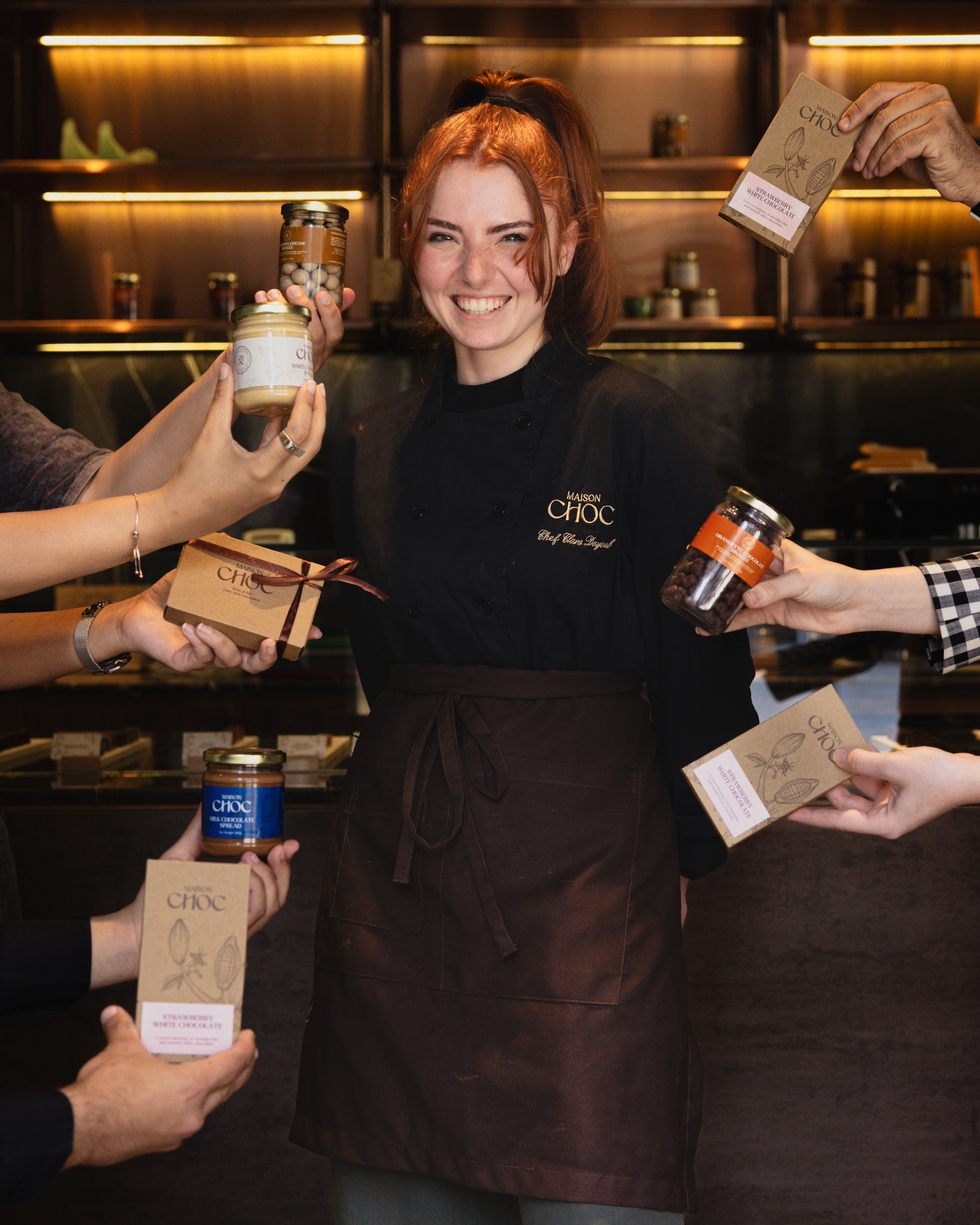
UN World Food Program + Maison Choc
Maison Choc collaborates with the World Food Programme (WFP)… read the story below:
Bread that Nourishes | Honey that Empowers | Chocolate that Unites
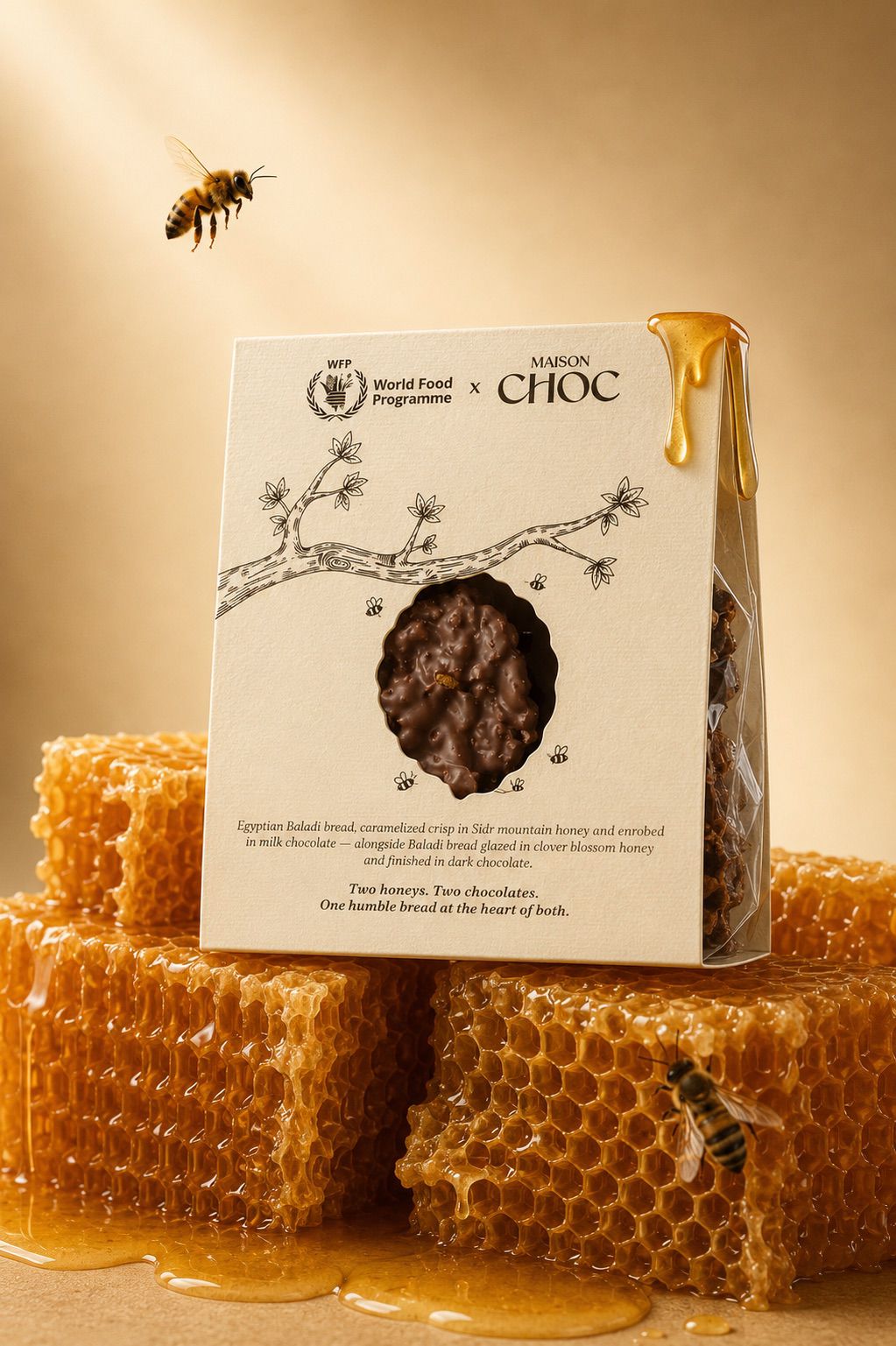
Created in collaboration with the United Nations World Food Programme (WFP), these honey-glazed chocolate bites begin with Egypt’s beloved Baladi bread, a symbol of food security. Through the National Flour Fortification Programme, WFP supports the Government to enrich this bread with iron and folic acid to better nourish vulnerable families across the country.
The honey, sourced from WFP-supported communities, tells another story. Since 2020, WFP has supported more than 500 rural community members with beehives and hands-on training, helping build sustainable livelihoods and strengthen food security.
Enrobed in bean-to-bar chocolate by Maison Choc, this creation is more than a sweet – it is nourishment shaped by resilience, a tribute to the hands that grow, fortify, harvest, and craft.
For every item purchased, Maison Choc will match a portion of the proceeds as a donation supporting the UN World Food Programme’s work in Egypt.
Meet the Expert Behind this Creation- Clara
Transportation to Conference Venue
Transportation
BUE Buses
The British University in Egypt
The university BUE Buses are available for the Conference Delegates on the 7th and 8th June 2026 from specific pick-up and drop-off point to the conference venue.
The pick-up and drop-off points will be as follows:
First: Tahrir/ Abbassia
BUE Bus #135
Driver Mobile: 01009110773
• First stop: Hardee’s, American University in Cairo – Departure at 7:45 a.m.
• Second stop: Abbassia (near the bridge, in front of El Sherif Plastics Store) – Departure at 8:00 a.m.
• Second stop: Abbassia (near the bridge, in front of El Sherif Plastics Store) – Departure at 8:00 a.m.
7 June 2026:
• Return departure from the university at 8:30 p.m.
• Return departure from the university at 8:30 p.m.
8 June 2026:
• Return departure from the university at 6:30 p.m.
• Return departure from the university at 6:30 p.m.
Second: Sheraton / Nasr City
• First stop: Radisson Blu Hotel, Sheraton – Departure at 7:45 a.m.
• Second stop: First Makram Ebeid Street, City Center (outside the main road) – Departure at 8:00 a.m.
• Second stop: First Makram Ebeid Street, City Center (outside the main road) – Departure at 8:00 a.m.
Third stop: Al Ahly Club – Departure at 8:05 a.m.
BUE Bus #184
Driver Mobile: 01000374858
7 June 2026:
• Return departure from the university at 8:30 p.m.
• Return departure from the university at 8:30 p.m.
8 June 2026:
• Return departure from the university at 6:30 p.m.
• Return departure from the university at 6:30 p.m.
In addition, an extra bus will be available on 8 June 2026 to transport participants to the conference dinner aboard the Nile Crystal Cruise at Maadi Corniche.
BUE Bus for Gala Dinner
Driver Mobile: 01019446929
Waiting from 6:00pm.
Departure from the university will be at 6:30 p.m., with return departure from the cruise at 10:30 p.m., followed by transportation back to the university in El Shorouk City.
For those of you who have signed up and paid for the Conference Gala Dinner, please find the details below:
-
Onyx Nile Cruise
-
Corniche el Maadi (same place as Nile Crystal)
-
The cruise is two hours: from 8:30 pm to 10:30 pm (we should be there at 8:00 pm


Scientific Committee
Scientific Committee
Scientific Committee
Prof. Shadia Fahim, Dean of the Faculty of Arts and Humanities, The British University in Egypt
Prof. Patrick Lonergan, University of Galway, Ireland
Prof. Khalid Amine, Abdelmalek Essaadi University, Morocco
Associate Prof. Rania M Rafik Khalil, Director, Research Centre for Irish Studies (RCIS), & Acting Vice Dean for Teaching and Learning, Faculty of Arts and Humanities, The British University in Egypt (Conference Convenor)
Associate Prof. Walaa Hassan, Acting Head of Department of English Language and Literature, Faculty of Arts and Humanities
Dr. Alison Taft, Leeds Becket University
Conference Convenor
Conference Convenor
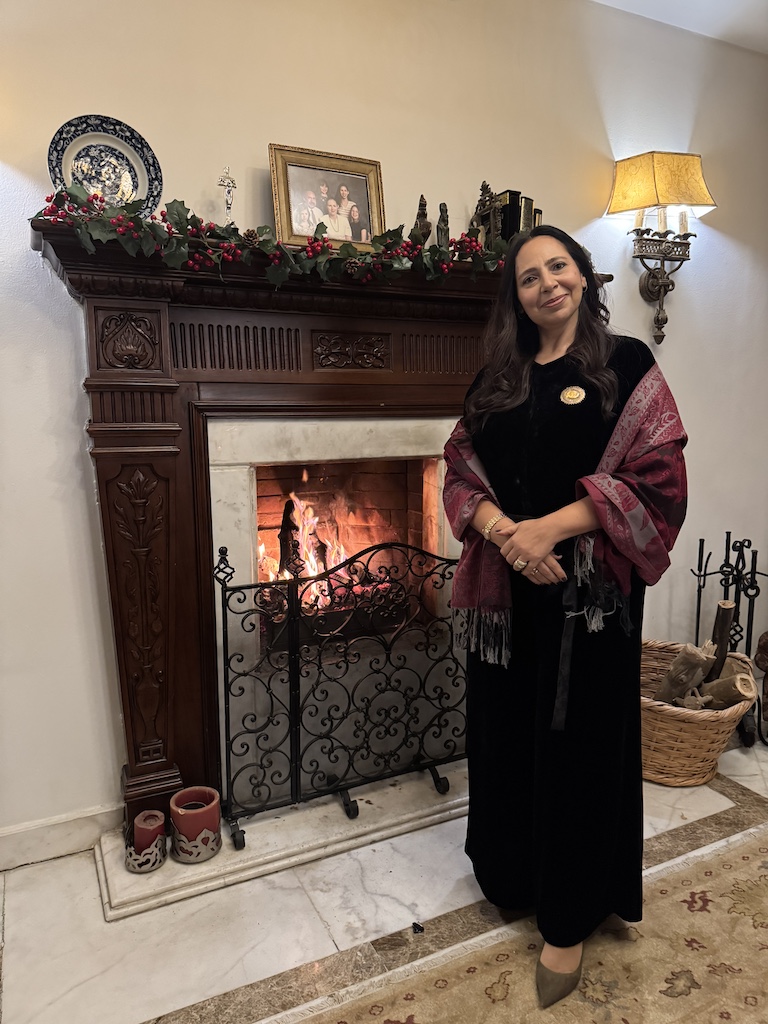
Rania Mohamed Rafik Khalil is the founding Director of the Research Centre for Irish Studies (RCIS) at the British University in Egypt and holds the position of Acting Vice Dean for Teaching and Learning, Faculty of Arts and Humanities at The British University in Egypt.
Associate Prof. Khalil established the RCIS in October 2020 and it was inaugurated by the Ambassador of Ireland in Cairo H. E. Sean O’Regan in November 2021.
More About RCIS – visit the website
https://www.bue.edu.eg/research-centres/research-centre-for-irish-studies-bue
5 Years Anniversary RCIS
The Celebration event is supported by the Embassy of Ireland in Egypt and the Government of Ireland- Department of Foreign Affairs in Dublin
50 Years of Irish-Egyptian relations as well as the 5th Anniversary of establishing the Research Centre for Irish Studies (RCIS).
The event comes as part of the the international conference programme.
Research Centre for Irish Studies (RCIS)
Visit the Research Centre for Irish Studies (RCIS)
https://www.bue.edu.eg/research-centres/research-centre-for-irish-studies-bue

About the Research Centre for Irish Studies (RCIS)
The Research Centre for Irish Studies (RCIS) at the British University in Egypt, is a university-based research centre established with a formal Decree from the University President in October 2020 and inaugurated by H.E. Ambassador Seán O’Regan, Ambassador of Ireland to Egypt on the 17th of November 2021. RCIS has a signed MOU with the Embassy of Ireland in Egypt and is the only one of its kind in Egypt and the MENA region.
The Research Centre for Irish Studies (RCIS) since its inception has built a reputation as a centre of excellence in interdisciplinary research grounded in partnerships and collaborations at both the national and international levels. Internationalisation is at the forefront of the RCIS priorities and ranges from organizing internationally recognized conferences like IASIL 2023 to inviting visiting professors of Irish studies and promoting intercultural exchange through hosting on campus Irish performers, artists, and Irish theatre companies. The Centre has engaged in a number of research, cultural, artistic and community initiatives which make it the focal point for all matters Irish in Egypt and the MENA region.
RCIS plays an active role in bridging the gap between Egyptian researchers and international scholars creating a vast network of professionals interested in Irish Studies. RCIS supports early and mid-career researchers through mentoring and creating the relevant links for the publication of interdisciplinary research and work related to Irish, Anglo-Irish, and British studies in high-impact international journals and or local nationally recognised journals approved by the Supreme Council for Universities in Egypt. RCIS gives equal attention to the cultural, musical, artistic, and literary side of Irish studies.
The Research Centre for Irish Studies (RCIS) through its national and international collaborations balances Irish studies as a discipline rooted in Ireland and Irish studies in the wider world beyond the borders of Europe and North America.
Memberships
IASIL – International Association for the Study of Irish Literatures https://www.iasil.org
EFACIS- European Federation of Associations and Centres of Irish Studies https://www.efacis.eu
Publications
Khalil, Rania M Rafik (2024). Irish Playwright Marina Carr on Theatre, War, and Palestine: An Interview, Cairo Studies in English, Journal of Research in Literature, Linguistics, and Translation Studies, Cairo University, Volume 2024, Issue 1, p.236-243. doi.10.21608/CSE.2024.294975.1172,
https://cse.journals.ekb.eg/article_363193.html
Khalil, Rania M Rafik, Foreword. AWEJ for Translation & Literary Studies, Volume 8, Number 2 May 2024 Pp.2 DOI: http://dx.doi.org/10.24093/awejtls/vol8no2.1A
Khalil, Rania M Rafik, “Irish drama and wars in the twentieth century” (2023). English Language and Literature. 30. https://buescholar.bue.edu.eg/eng_lang_lit/30
Khalil, Rania M Rafik, “Irish drama and wars in the twentieth century” (2023). English Language and Literature. 30. https://buescholar.bue.edu.eg/eng_lang_lit/30
Khalil, Rania M Rafik, “Nomadic Identities in Marina Carr’s By the Bog of Cats… and Anna Karenina” (2021). English Language and Literature. 26.
https://buescholar.bue.edu.eg/eng_lang_lit/26
Khalil, Rania M Rafik, “Ireland is My Home” (2020). English Language and Literature. 11. https://buescholar.bue.edu.eg/eng_lang_lit/11
International Grants
2025
December 2025 Embassy of Ireland in Egypt and the DFAT (5,000 Euros)
2024
Embassy of Ireland Fund (317 Euros)
2023
Irish Studies ESP Grant – Department of Foreign Affairs in Dublin (180,000 EGP)
Culture Ireland Grant (1,800 Euros)
Embassy of Ireland in Egypt (600 Euros)
2022
Irish Studies ESP Grant – Department of Foreign Affairs in Dublin (160,000 EGP)
2021
Embassy of Ireland (800 Euros)
2020
Culture Ireland Grant (3,000 Euros)
Embassy of Ireland in Egypt (1,700 Euros)
Irish Performances
2024
St. Patrick’s Day Celebration – Shamrockawy Band
2023
Gerry O’Connor – Irish Folklore Fiddle Music Performance
2020
Theatre adaptation of James Joyce’s Dubliners Women performed live on campus by WitchWork Theatre Company Dublin at The British University in Egypt, in February 2020.
International Conferences Organised
Global North and Global South Perspectives 7-8 June 2026
Organised by the Research Centre for Irish Studies in association with the Embassy of Ireland in Egypt and in collaboration with the Department of English Language and Literature – Faculty of Arts and Humanities
Conference website
IASIL 2023 Sustainability and Irish Studies Conference 17-21 July 2023
Organised by the Research Centre for Irish Studies (RCIS) at The British University in Egypt Campus in partnership with:
1. Embassy of Ireland in Egypt
2. Culture Ireland
3. International Association for the Study of Irish Literatures (IASIL)
Conference website
Grants
Special thank you to the Embassy of Ireland in Egypt and the DFAT for the international grant to support this conference.
Tourist Activities
Tourist Activities
Suggested Touristic Places to Visit
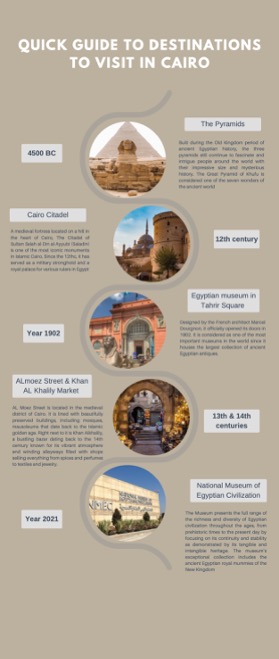
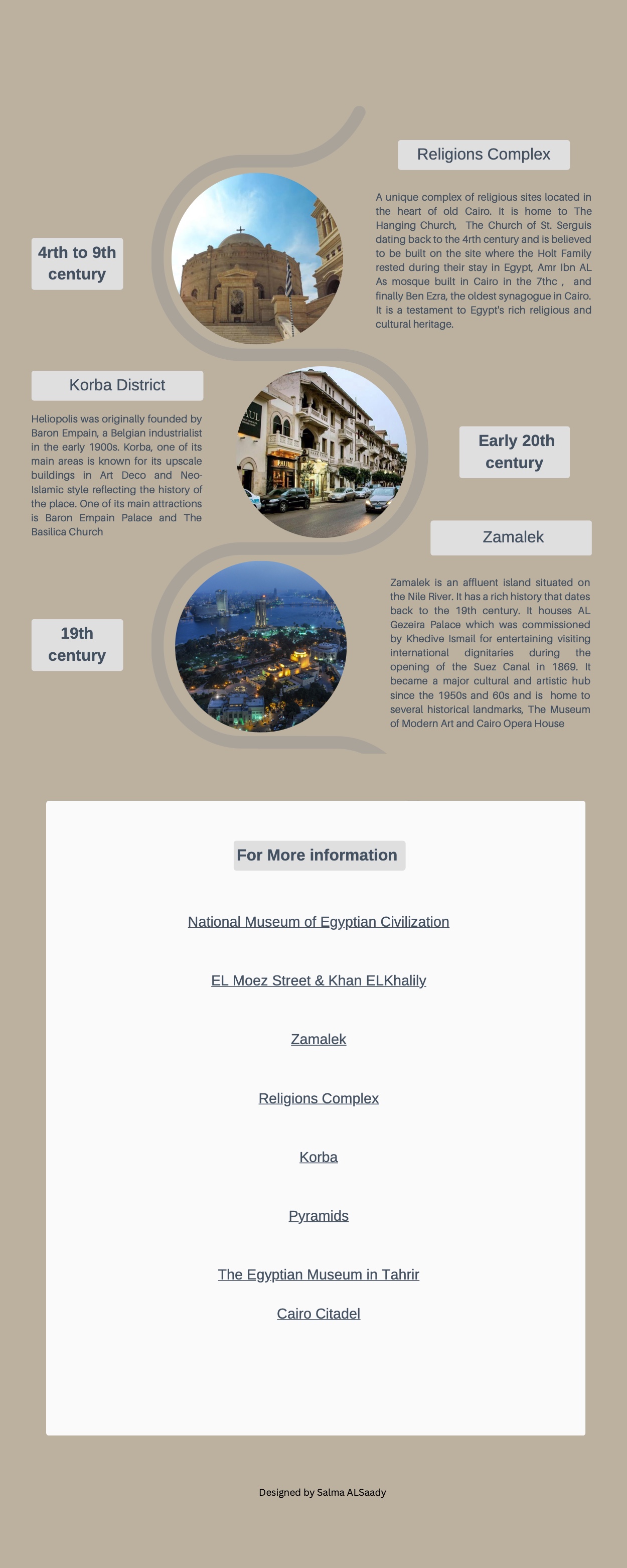
Plan Your Personalised Tourist Trip Around Egypt
Private Tours (Customised Tour with a Tour Guide)
You may wish to plan your individual customised tour. Below is a recommended Egyptologist and tour guide you can contact directly. Please mention IASIL 2023 Conference Egypt.
Mrs. Hanan Deyab
Mobile: +0122-3161-899
email: hdeyab62@gmail.com
Pyramids of Giza
Photo credit: Dr Mona Abdel Hady
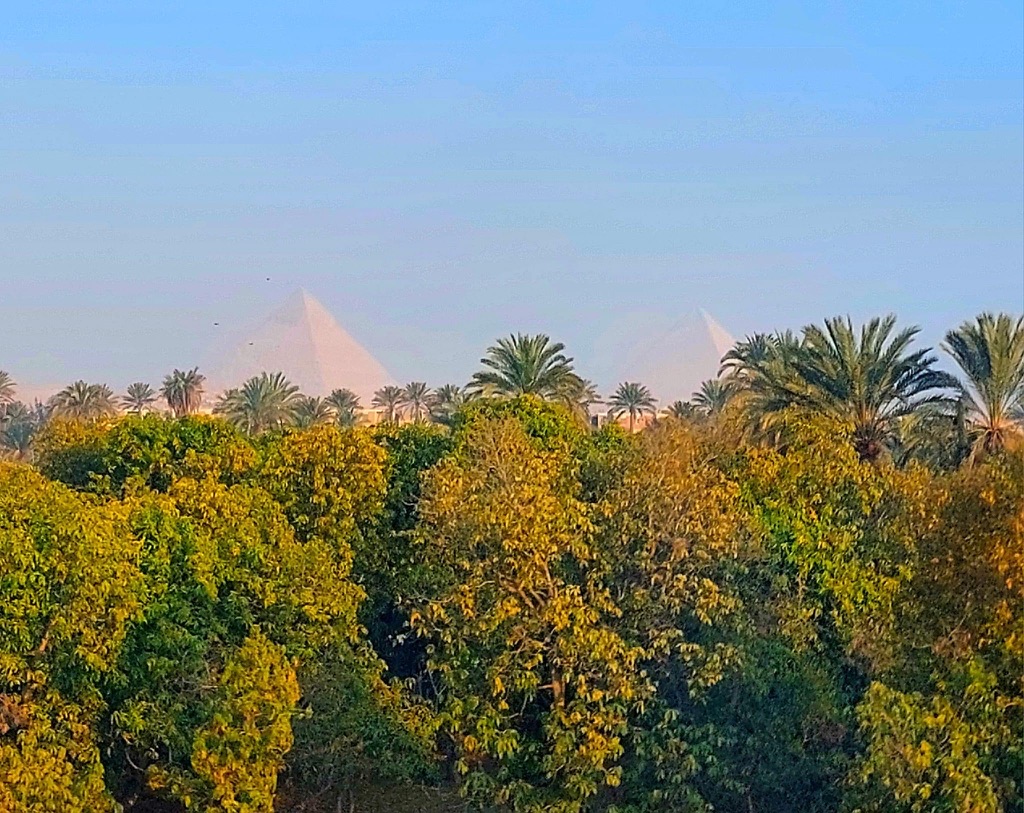
Photo credits: Mahynour Saleh
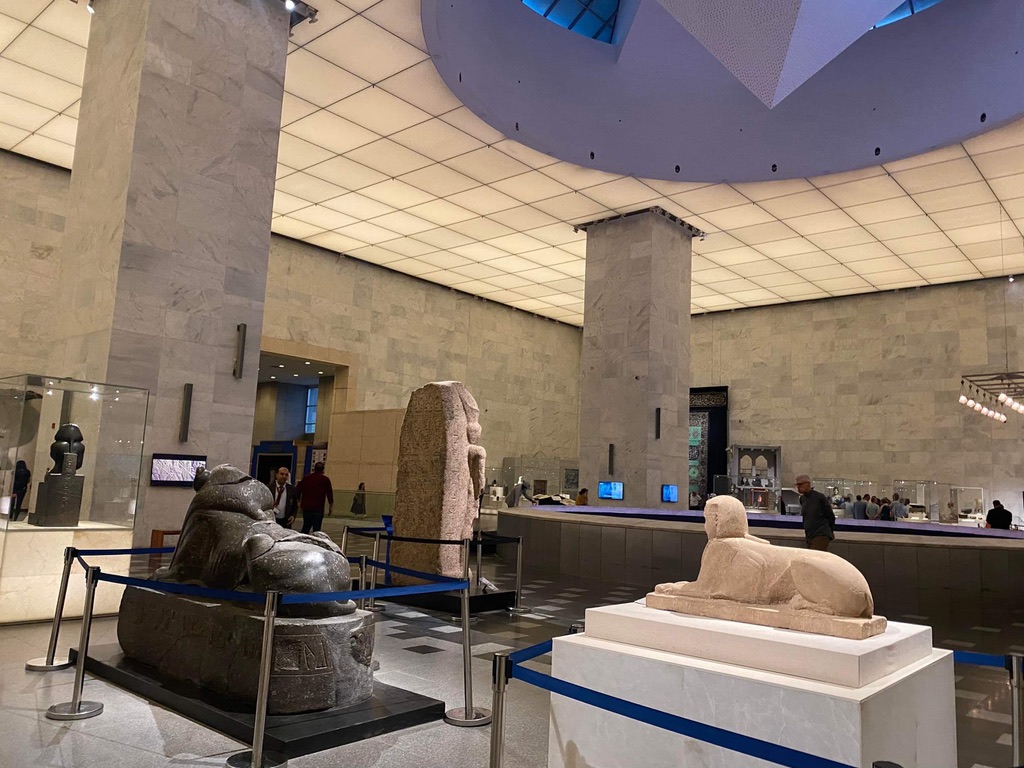
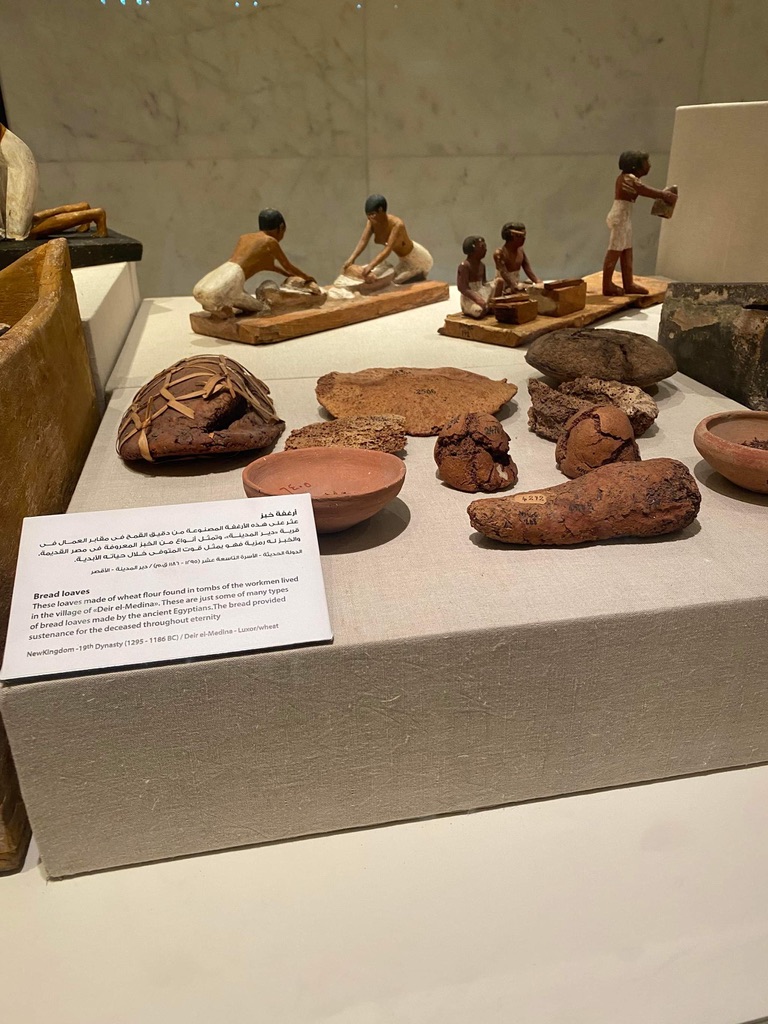
Photo credits: Rania M Rafik Khalil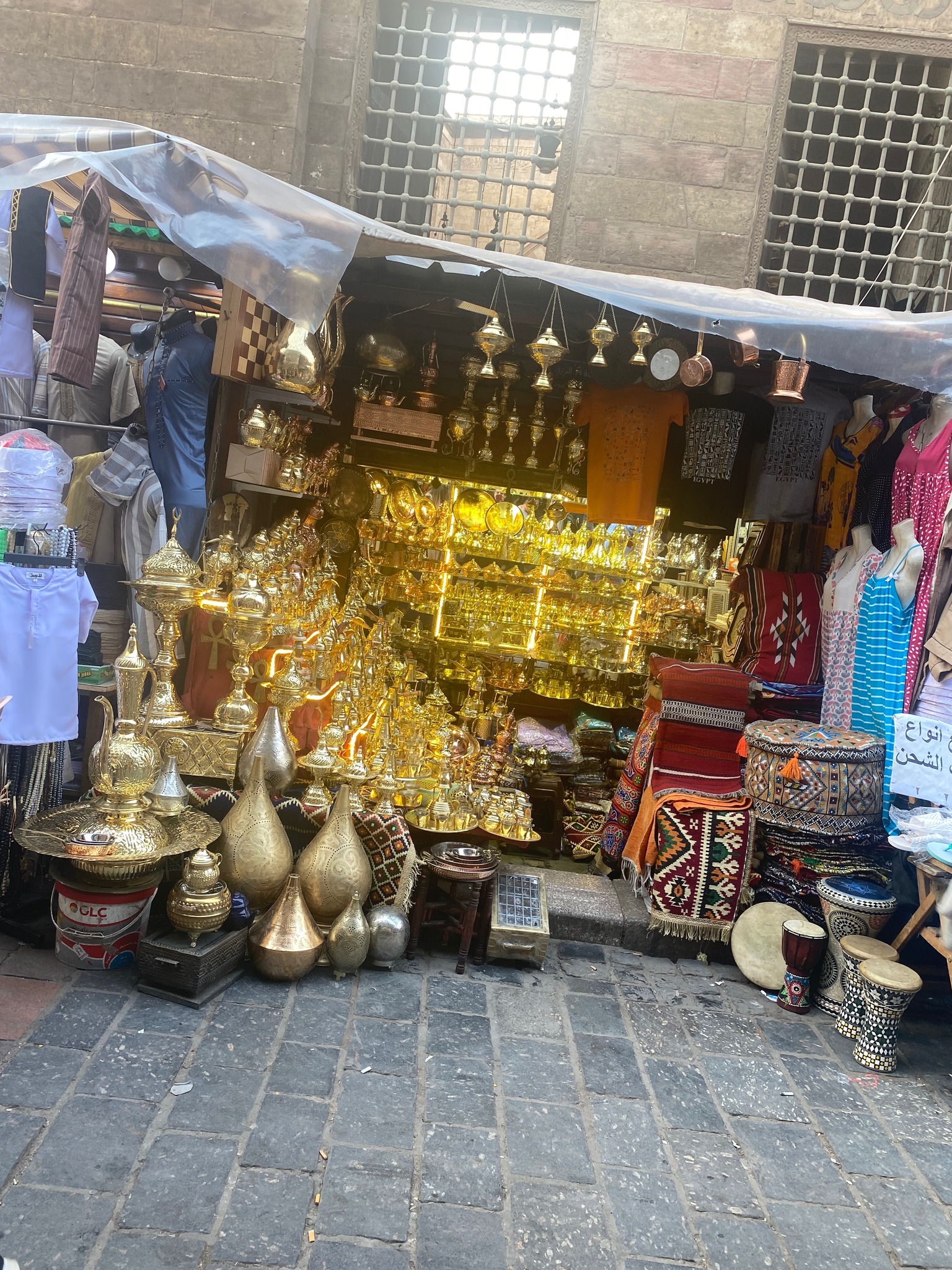
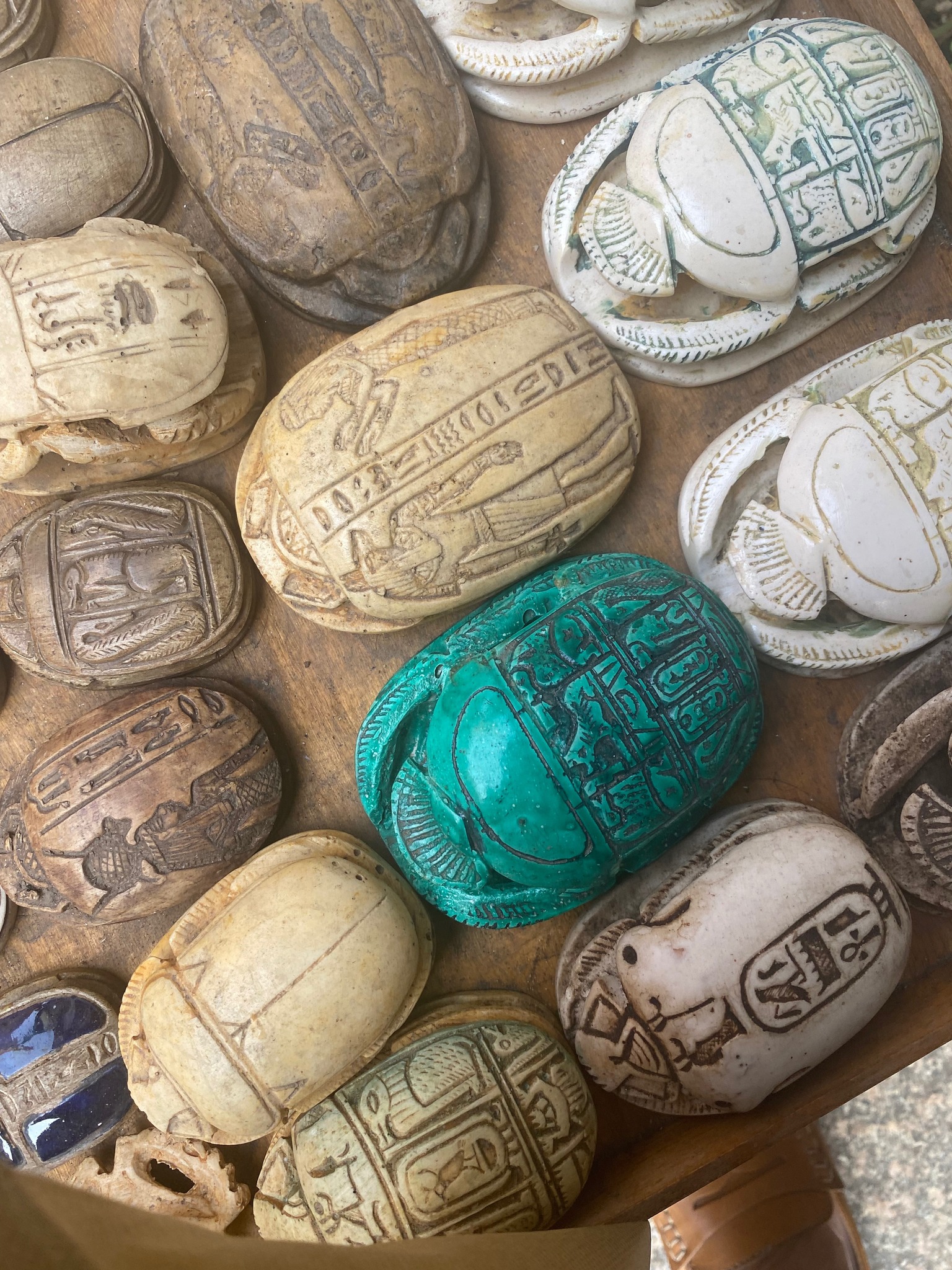
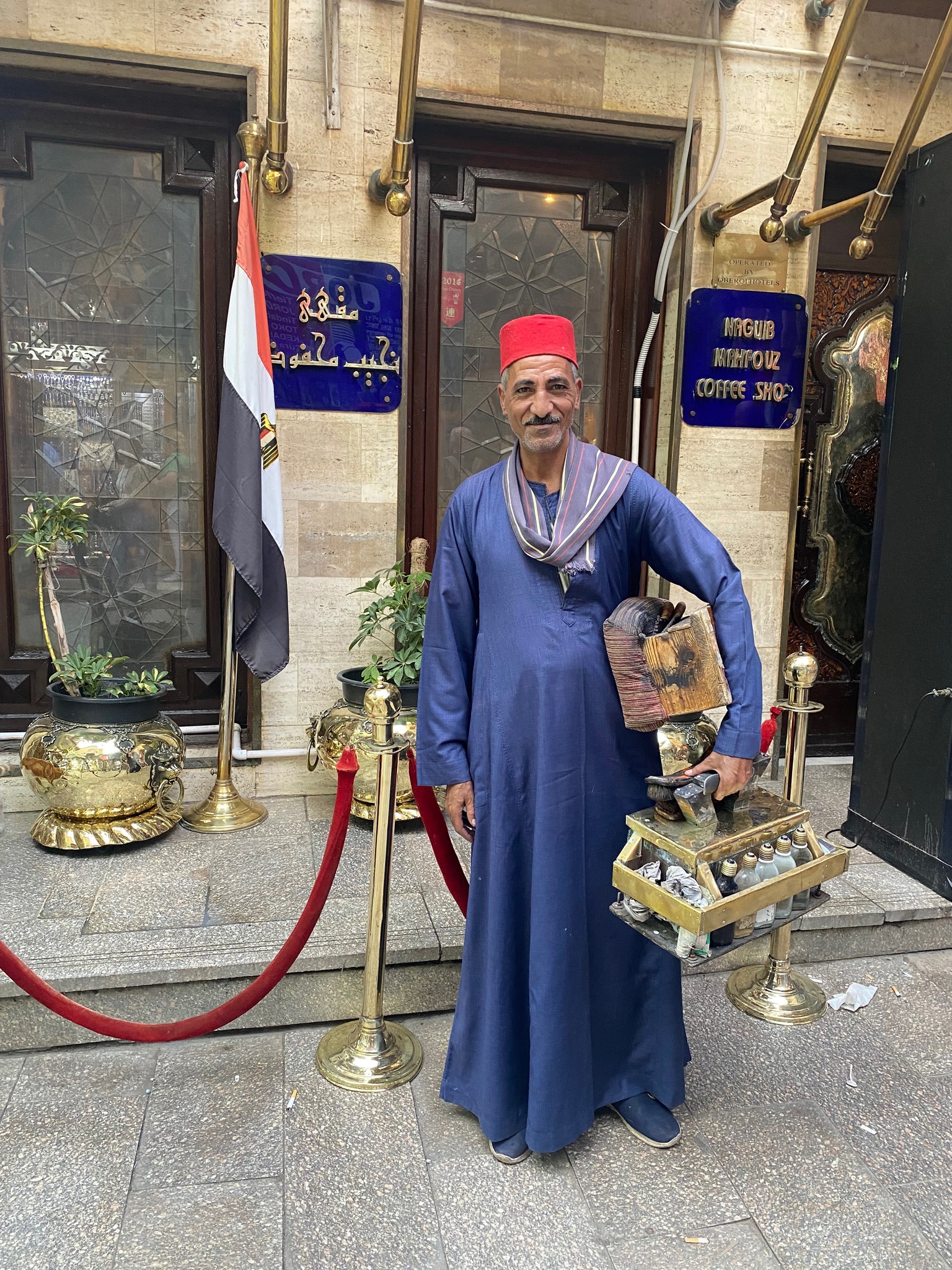
Accommodation and Hotels
Accommodation
Campus Accommodation
The British University in Egypt (BUE) can offer campus accommodation to the Conference participants. Spaces are limited and reservation is on a first come first serve basis. Campus accommodation is managed directly by the university and is not under the responsibility of the conference organising committee.
For further inquiries about campus accommodation and details kindly email Dr Cherif Attared cherif.attared@bue.edu.eg with subject line Global North and Global South Conference 7-8 June 2026 – RCIS
The Conference Organising Committee is NOT responsible for the campus accommodation management and is not responsible for handling campus accommodation concerns, inquiries, or complaints.
For Campus Accommodation Complaints please directly contact Dr Cherif Attared cherif.attared@bue.edu.eg
Hotel Accommodation
Suggested Hotels (30 min drive from BUE campus)
Concorde El Salam Hotel, Radison Blu, JW Marriott, Renaissance Cairo Mirage City, Tolip Family Park Hotel, Triumph, Dusit Thani.
Recommendation for closest hotels:
El Salam Concorde Hotel
Radison Blu
Renaissance Mirage
Transportation (University Bus- BUE silver bus)
Transportation will be provided by the IASIL 2023 Organising Committee daily to the Conference Venue: The British University in Egypt campus in El Sherouk City, Suez desert road, Cairo, Egypt.
Tip:
You can use the Green Line 3 Metro and the LRT to travel from Zamalek to El Shorouk city.
Visit our University
Visit The British University in Egypt
Click on the link below to visit the British University in Egypt
https://bue.edu.eg/
Campus
Getting Around Campus
Our campus is fairly large but easy to navigate. From the main gate, in front of you, is Building C. This is the main building. Building C has the auditorium. Registration Desk will also be at Building C where you will pick up your conference bag.
Golf Carts are available all day around campus to help you get to the other venues. Alternatively, you can walk. Most venues are only five minutes apart.
Food Court
Cafes are available on campus where you can grab a coffee, buy a salad, hot/cold sandwiches, or a sweet treat.
Supermarket
Circle K is a small supermarket on campus at the heart of the Food Court.
Bank
CIB bank is located on campus in Building E, 1st floor. Working hours are 8:30am to 3:00pm. The CIB ATM is located in front of Building E.
AAIB ATM is located in front of Building E and another one is available at the Food Court. AAIB is a five minutes walk from campus if you need additional services.
About Egypt
About Egypt
We look forward to welcoming you to Egypt.
About Egypt and Egyptians
Cairo and Alexandria are a blend of many peoples and cultures since pharaonic times as well as Greeks, Romans, Jews, Armenians, Arabs and Italians, among others. Some have their own communities, but the majority mixed with the local population leading to the Egypt we know today. Most Egyptians consider themselves to be the descendants of the pharaohs and are inclined to see themselves as different from Arabs. Egyptians speak local Arabic which is pertinent to Egypt as opposed to the Classical Arabic that is used across the Arab region. In general, Egyptians welcome foreigners and are cordial and warm. Egyptians tend to touch on the arm in a friendly gesture and mean no harm. Egyptians also tend to talk loudly and use hand gestures to communicate meaning. Some can speak fluent English and French. Some will attempt to speak English or French just to help you out if you need assistance, but don’t expect correct grammar or appropriate use of vocabulary. Egyptians have changed after the revolution and are struggling with the economic challenges. However, nearly anything you could possibly need is now available if you are willing to pay the price, especially imported consumer goods. As a result, such products may be more expensive when compared to locally manufactured goods. Overall, Egyptians are generous, conservative, and respectful. You will be expected to adjust yourself, as sensitively as possible, to the prevailing customs and norms.
Food
Food is varied here in Egypt. You will find traditional food like Koshary, falafel, fava beans cooked in ten different ways all delicious, french fries sandwiches, egg plant sandwiches, sougok (oriental sausages), shakshouka, molokheya (Jews Mellow a dark green soup) with white rice and beef cubes or chicken), in Alexandria, molokheya is served with shrimps instead of beef or chicken; fattah (rice with meat/chicken), gulash with minced beef or cheese, mahshy (vegetables stuffed with spiced rice), stuffed pigeon with rice, as well as traditional desserts like om ali (pastry soaked in milk, honey and nuts cooked in the oven), rice pudding (ruz bel laban), mehalabeya (vanilla custard), kol we oshkor (baklava), konafa (pastry swirl stuffed with nuts), basbousa bel ishta (semolina flour mini dessert usually served with clotted cream).
International food is available widely across Egypt ranging from the fast food chains like Pizza Hut, Hardees, Chilly’s, Dunkin Donuts, KFC, McDonald’s to reasonably priced restaurants/cafes like Zooba, Ovio, La Poire, The Cork, The Eatery, Paul’s Cafe, La Casetta, Maison Thomas, Mo Bistro, Mori Sushi, Beanos Cafe, as well as high end international restaurants like Laduree.
Shopping
Khan El Khalily is the local bazaar and worth a visit for traditional gifts and leather goods.
Open Air Mall in Madinaty (7 min drive from campus). City Stars Mall, Cairo Festival City Mall. There you can find international brands like Guess, Marks & Spencers, Michael Kors and much more.
Climate
Egypt, more recently, has become fairly hot in the summer, particularly in July and August; we do get milder weather in October till December. However, over the past five years there has also been unpredictable rain fall between October and February varying between drizzle and torrents of rain. March and April have become trickier to predict due to climate change, but the weather is pleasant and is not too hot or too cold. Since the IASIL2023 is scheduled for July 17-21, 2023, it is important to note that it is very hot during July in Egypt. We recommend you read the section below on Clothes / What to Wear.
Traffic
Traffic is difficult to navigate in Cairo and Alexandria, particularly if you are driving. Google Maps is pretty helpful in finding alternative routes, but it may not always pick up on the newly constructed road network that connects the nation. It is always advisable to give yourself an extra 30 minutes if you are scheduled for an appointment. The duration of getting stuck in traffic is not predictable.
Transportation
There are taxis, buses, Uber, Careem, first class sleeper trains, and minibuses. The metro provides convenient low-cost transport to areas of Cairo, but is often crowded during rush hours.
You can also use the Green Line 3 Metro and the LRT to travel from Zamalek to El Shorouk city.
Transportation runs as usual even on official holidays.
Electricity
The electricity in Cairo, as in Europe, is 220 Volt and 110 Volt as the electricity in the United States/Canada.
What to Wear
Lightweight, loose-fitting cotton clothes are the most comfortable. Breathable fabrics are best for the hottest days. Many places in Cairo have air conditioning. Egyptians take pride in dressing well or as neatly as they can afford to. Semi-formal is expected for the IASIL2023 Conference on campus, Reception and / or the Gala dinner. Casual clothes are suitable for the tourist trips. Women don’t need to wear headscarves. Headscarves are only expected if they are on a tourist visit to a Mosque out of respect. There is no need to alter any of your dress code whether you are in Cairo, Alexandria, Luxor, Aswan or on campus, this goes for both men and women. However, you should consider the place you are going to and use your discretion. It is advisable not to wear halter-tops, skimpy shorts, micro-skirts or translucent fabric clothes. If you do, at least make sure you have a shawl with you. Hat, sunscreen and sunglasses are good to have, particularly if you are allergic to the sun or sensitive to sunlight. July and August are the hottest months in Egypt.
International Credit Cards:
International Credit Cards such as MasterCard and Visa are accepted. It is important to remember though that Cairo is very much still a cash-oriented society outside of the malls and fancy restaurants or international cafes.
There are ATM machines in Cairo and other major cities in Egypt that accept any hard currency or credit cards. Your account will be debited with the equivalent of the Egyptian pounds withdrawn, often in addition to a foreign transaction fee. You may be asked to show a valid ID so it is a good idea to keep one with you at all times during your stay in Egypt.
Banks
HSBC, Commercial International Bank CIB, Arab African International Bank AAIB.
CIB is available on our campus. ATM machines for CIB and AAIB are also available on campus. AAIB is a 5 minute walk away from the campus.
Visa Travel Advice
Entry Visa
It is of high importance for each delegate to IASIL 2023 attendee or presenter to take into account the necessary steps to apply for their entry visa to Egypt.
Before You Apply for Visa
Check with the Embassy of Egypt- Consulate in Dublin about the type of visa you need to attend/participate in a conference in Cairo.
egyptianconsulatedublin@yahoo.ie
Check with the Department of Foreign Affairs in Dublin about the visa required for those with Irish passports traveling to Cairo.
Visa Options
You can apply for a business visa which takes between 8 to 10 weeks to process.
You can apply for the e-Visa.
https://visa2egypt.gov.eg/
We Are Happy to Help
If you are traveling to Cairo from Ireland you can contact the Embassy of Egypt in Dublin and inform them that you are taking part in the Conference so they can assist you directly to expedite the visa process so you receive the visa on time before your travel dates.
Egyptian Consulate in Dublin
egyptianconsulatedublin@yahoo.ie
Invitation Letter – Visa Purposes
If you need an invitation letter for visa purposes, send an email with subject line Invitation Letter for Visa to: rania.khalil@bue.edu.eg
Include as an attachment a scanned copy of your valid passport in your email correspondence.
Airport to Hotel
Arrival to Cairo International Airport
Arriving in at Cairo Airport can be an experience.Here are some helpful links to make your trip smoother (I hope):
Cairo Airport Travel (airport shuttle service)
https://cairoshuttlebus.com/
Ahlan Service
(Meet and Assist at Cairo International Airport)
https://www.cairo-airport.com/en-us/Services/Ahlan-Service/Service-Information
For more information, please contact Ahlan Service on their hotline 002-16708 or e-mail on exclusive@cairo-airport.com
Photo Consent Notice
Gallery
Important Notice:
There will be photography during the conference events. Photos / videos will be posted on social media to meet the terms and conditions of grant donors.
Behind the Scenes - Photos
Meet the hardworking people behind the scenes:
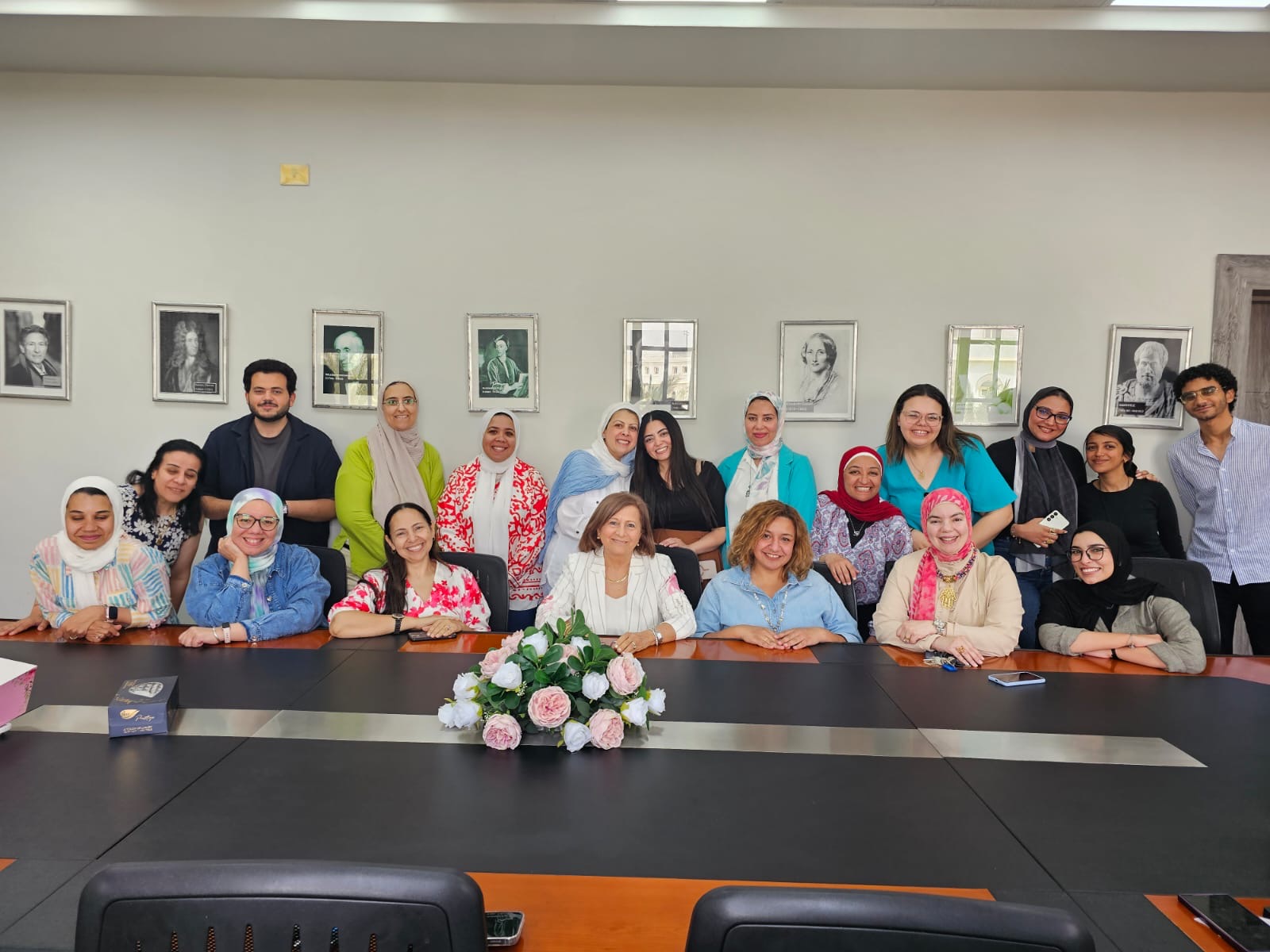
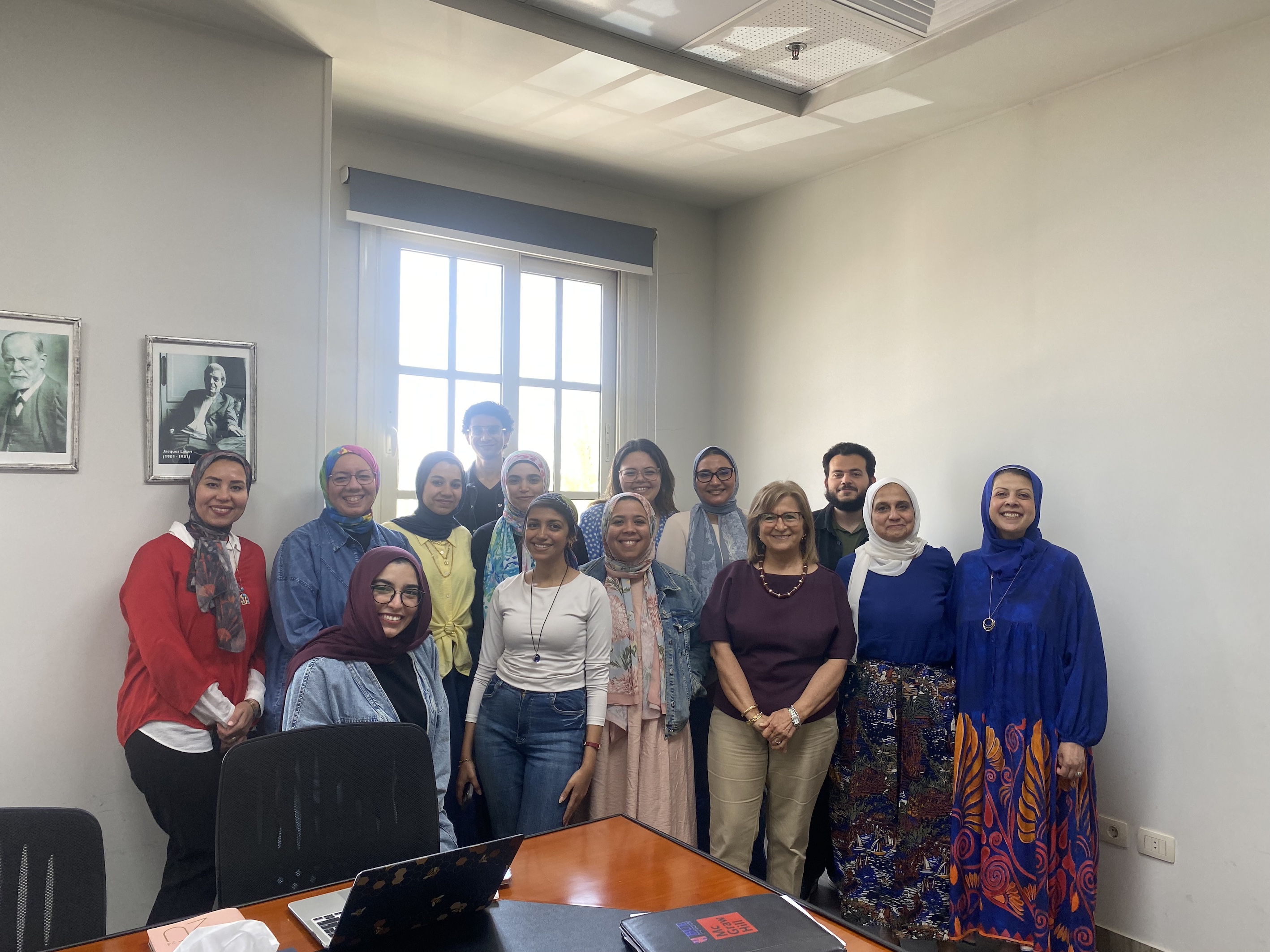
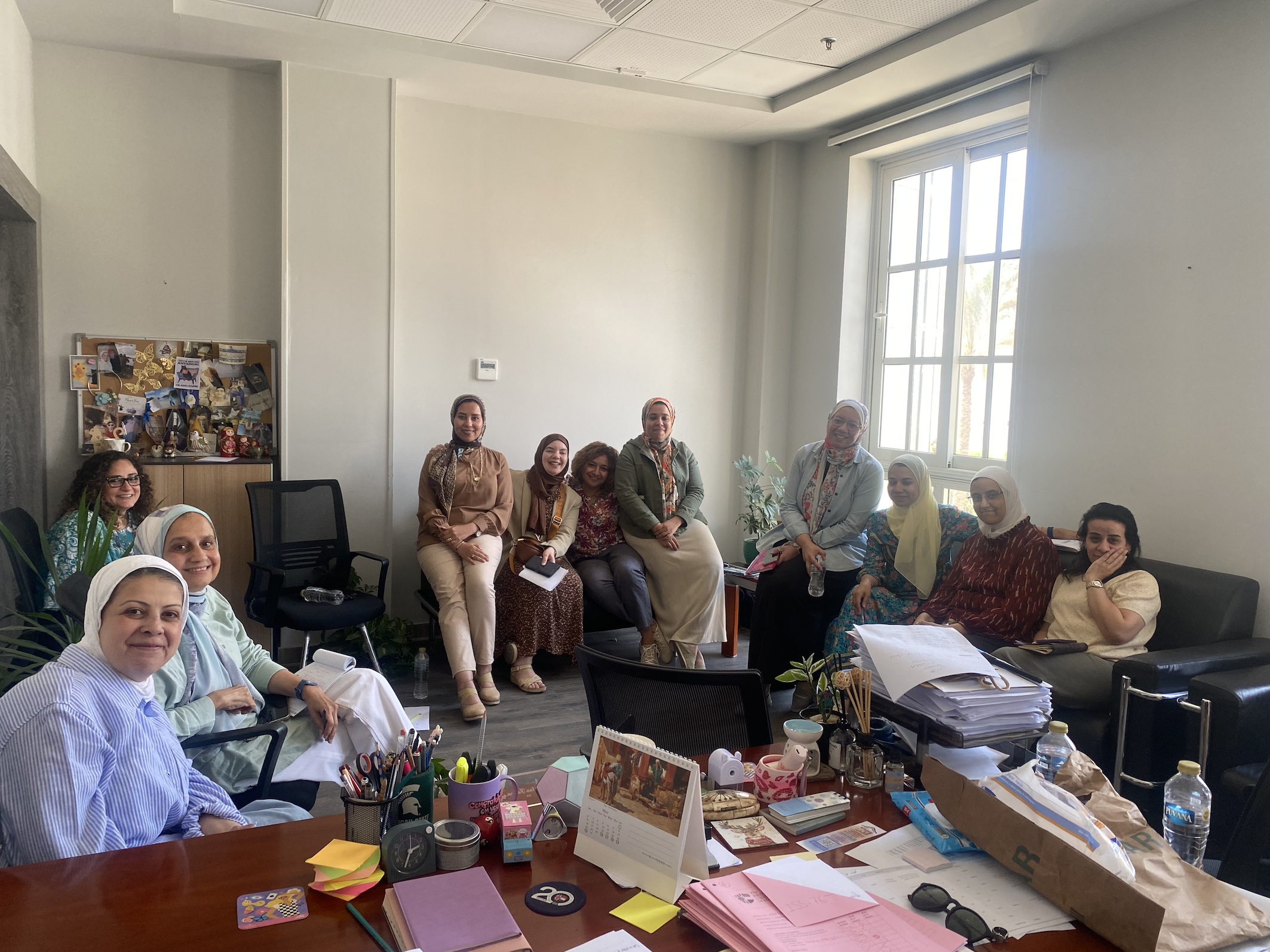
This photo was taken 23 May 2026 in the middle of marking exams, invigilation of exams, meeting deadlines, and organising for the conference. We were working to beat the deadline before the Eid Al Adha holiday 25-30 May 2026. Conference Organising Committee meeting in Dr Walaa’s Office.
Special Thanks
The Research Centre for Irish Studies (RCIS) and the Director of RCIS Associate Prof. Rania Rafik Khalil, would like to acknowledge the support received from individuals during the preparation stage of the conference, during the conference days on campus, and after the conference.
Special Thanks:
Embassy of Ireland in Egypt
The British University in Egypt
Faculty of Arts and Humanities
Grants Office
Finance Department
IT Support
Eng. Marehan Sabry El Shamy
Eng Ibrahim Maaty
Eng Omar Alkotb
Mr. Emad Aboelkheir
Mr. Mostafa Mossad
Campus Management
Dr. Cherif Attared
Ms. Aya Ashraf
Mr. Ahmed El Harany
General Mohamed Abdelhady
Transportation Management
General Yasser El Kholy
Travel Department
Mr Abdelrahman Soliman
Ms Hend Ashraf